Featured post

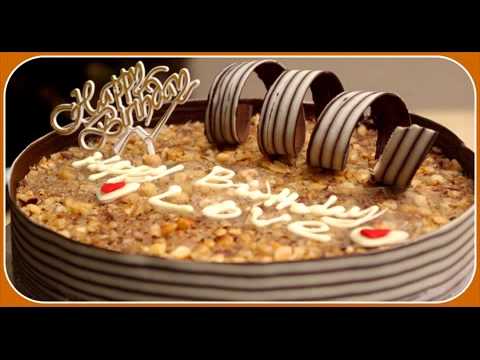
Online Cake Delivery Petaling Jaya.

§ https://youtu.be/20AnCkN8du8 @ @ # 🔍🔎🔍🔎@http://www.crepes21.com.my/order-cake-online/ Option 2: WhatsApp Order If you are ...

Paralympics

Paralympics

Image result for Paralympics
The Paralympic Games is a major international multi-sport event involving athletes with a range of disabilities, including impaired muscle power (e.g. paraplegia and quadriplegia, muscular dystrophy, post-polio syndrome, spina bifida), impaired passive range of movement, limb deficiency (e.g. amputation or dysmelia), ...
Wikipedia › wiki › Paralympic_Games
International Paralympic Committee › rio...
Mobile-friendly - Rio 2016 Paralympic Games 7-18 September. ... Rio 2016 Paralympic torch lit in Brasilia The Paralympic torch relay will begin on 1 September and will visit five cities around Brazil on its way to Rio de Janeiro. Latest Rio 2016 record: 145,000 tickets sold on one day So far, about ...
Mobile-friendly - 50 unmissable events at the Rio 2016 Paralympic Games. ... Official Sponsors of Rio 2016 Paralympic Games. Official Supporters of Rio 2016 Paralympic Games.
Rio 2016 › paralympics › sports
Mobile-friendly - Get ready for the intense excitement of 23 Paralympic sports, including canoe and triathlon for the first time, over 11 ...
Wikipedia › wiki › Paralympic_Games
Mobile-friendly - The Paralympic Games is a major international multi-sport event involving athletes with a range of disabilities, including impaired muscle power (e.g. paraplegia and quadriplegia, muscular dystrophy, post-polio syndrome, spina bifida), impaired passive range of movement, limb deficiency (e.g. amputation or dysmelia), ...
Mobile-friendly - The latest news from U.S.Paralympics, a division of the United States Olympic Committee.
Paralympics New Zealand › nz › home
Mobile-friendly - Paralympics New Zealand is the official National Paralympic Committee (NPC) for New Zealand. We are responsible for ...
paralympics.org.uk
Mobile-friendly - Our incredible athletes are training hard, but we need your help to do everything we can to supercharge ...
Paralympics Ireland › ie › home
Mobile-friendly - Paralympics Ireland must raise €564,000 in 2016 to cover the costs of sending the Irish Paralympic team to Rio. We are ...
Twitter app‎ - Installed
20.7K tweets • 3099 photos/videos • 104K followers. "BIG NEWS 680 hours of # Rio2016 live stream coverage on ...

Memo : Requests from Ps Luke.

 Memo : Requests from Ps Luke

 Ps Luke, can I have two half-boiled eggs daily?

I'm uncomfortable with the taste of margarine & the risk of sudden death. Can I have kaya instead ?
Below is a link of an autobiography of Dr Fred Kummerow

https://www.spacedoc.com/articles/dr-fred-kummerow-bio?_utm_source=1-2-2
Quote from Dr Fred Kummerow   : "Trans fats are now in the news as a health concern. I bqegan documenting my concerns about the negative effects of trans fats in 1957. I am gratified that the FDA has recently proposed measures to ban all manufactured trans fats from our food."

"My Ph.D. research involved identifying the chemistry of a factor in the blood (linoleic acid) that keeps the blood from clotting in the arteries and veins. This is a particularly important factor in today’s cardiovascular disease research since that clotting affects the blood flow from the heart."

"In 1945, I accepted a position in the chemistry department at Kansas State University in Manhattan, Kansas, where I established a basic research program in lipid chemistry. Lipid chemistry is simply the chemistry of fats (e.g., butter, margarine, lard, vegetable oils, trans

"I was born in Berlin, Germany on October 4th, 1914."

"I am currently 99 years old (as at February 2014) and still find basic research into what people eat and how that affects heart disease fascinating. I plan to work in the field as long as I am funded."


Photo of Dr Kummerow: L. Brian Stauffer
February, 2014

Difference between Poke, Red Quinoa & Red Spinach

3.50pm Difference between Poke, Poke, PokeRed Quinoa & Red Spinach.

Family :Amaranthaceae
Subfamily : Chenopodioideae
Genus : Chenopodium 
Species : C. Quinoa
Binomial name : Chenopodium quinoa
Family:Amaranthaceae
Subfamily:Chenopodioideae Genus:Chenopodium
Species:C. quinoa
Binomial name: Chenopodium quinoa 

Pokeweed Scientific Name(s) : Phytolacca americana(L)
Family : Phytolaccaceae
Pokeweed Scientific Name(s):  Phytolacca americana(L).
Family: Phytolaccaceae


1st Retest Of Coloured Characters : Testing Of Blogger 25-August-2016 Thursday

Red Characters Ochre Yellow Green Blue Purple Magenta

Testing Red Characters

Red characters Yellow Blue Green  Magenta

Google Analytics Account ID

http://tks61.blogspot.com

http://tks61.blogspot.com

Google Analytics Account ID

<script type="text/javascript" charset="utf-8">
function get_UA() {
txt = document.getElementById('scripttag').value;
var matches = txt.match(/(UA-[\d-]+)/);
if (matches[1]) {
alert(matches[1]);
}
}
</script>
<textarea name="script" cols="40" id="scripttag" rows="10"></textarea>
<button onclick="javascript:get_UA();">get account id</button>[/code]

World Of Culinary Delights


Monday, 3 November 2014


Homemade Torsade Bread


When living abroad, finding "good" bread is often one of the biggest challenges. Now, as good, I, Swiss and European, would define bread that is crunchy, but not necessarily a baguette. Sourdough is yummy. Not so much the toast bread other nations' people seem to prefer. In Kurdistan you can get the toast bread, the baguette, the flatbread and a bread which they call "samoun"- diamond shaped breads. I even found an article on themonline.

I like samoun, but they're not the kind of bread I feel like eating all the time, hence the quest to find an easy recipe for a homemade version. And I might just have come across the easiest recipe on the planet: the no-knead bread as presented by the New York Times.

The first time I made it, my oven (I am in Iraq, remember) gave up on me and the hot temperatures. So I had to shuffle my bread between my own kitchen and the one in the office. And between an electric and not-so-well-functioning-gas oven. Result: the bread was ok, but not great. So since them, I am putting the temperature not at maximum, but just at 220°C (as is suggested in the article). And the result looks pretty neat:


I have slightly changed the measurements, also converting them into the metric system. This conversion business also reminds me to get cracking on my own conversion table. Not just for myself, but also for you people. Maybe you appreciate not having to google everything ;-).

Now, let's get started on the bread.

Ingredients (for two small loafs, roughly 20cm long):
350g all purpose (i.e. white) flour - you can change that according to your preference, or in my case, availability
1 tsp salt
1/3 tsp yeast (dry)
350ml water (room temperature)

Preparation:
Mix the dry ingredients in a bowl. Then add the water. Mix well, but stop when the water is absorbed. Do not knead (that's the whole purpose!). Cover the bowl with a kitchen towel and let the dough rest for at least 12 hours, but preferably more.

Once the dough is ready, pre-heat the oven to 220°C and place a pyrex (with cover) in it. Cut the dough into tow and put the first half on a surface covered with flour (the dough will be very sticky). Roll is, softly, in the flour and then twist it. Place it in the pyrex and put the cover back on. Bake for 30 minutes, then remove the lid and bake for an additional 20 minutes, until the crust is brown and crunchy. Et voilà! It really couldn't be easier.

No comments:


Sourdough Torsade Bread


Monday, 3 November 2014

Homemade Torsade Bread


When living abroad, finding "good" bread is often one of the biggest challenges. Now, as good, I, Swiss and European, would define bread that is crunchy, but not necessarily a baguette. Sourdough is yummy. Not so much the toast bread other nations' people seem to prefer. In Kurdistan you can get the toast bread, the baguette, the flatbread and a bread which they call "samoun"- diamond shaped breads. I even found an article on themonline.

I like samoun, but they're not the kind of bread I feel like eating all the time, hence the quest to find an easy recipe for a homemade version. And I might just have come across the easiest recipe on the planet: the no-knead bread as presented by the New York Times.

The first time I made it, my oven (I am in Iraq, remember) gave up on me and the hot temperatures. So I had to shuffle my bread between my own kitchen and the one in the office. And between an electric and not-so-well-functioning-gas oven. Result: the bread was ok, but not great. So since them, I am putting the temperature not at maximum, but just at 220°C (as is suggested in the article). And the result looks pretty neat:


I have slightly changed the measurements, also converting them into the metric system. This conversion business also reminds me to get cracking on my own conversion table. Not just for myself, but also for you people. Maybe you appreciate not having to google everything ;-).

Now, let's get started on the bread.

Ingredients (for two small loafs, roughly 20cm long):
350g all purpose (i.e. white) flour - you can change that according to your preference, or in my case, availability
1 tsp salt
1/3 tsp yeast (dry)
350ml water (room temperature)

Preparation:
Mix the dry ingredients in a bowl. Then add the water. Mix well, but stop when the water is absorbed. Do not knead (that's the whole purpose!). Cover the bowl with a kitchen towel and let the dough rest for at least 12 hours, but preferably more.

Once the dough is ready, pre-heat the oven to 220°C and place a pyrex (with cover) in it. Cut the dough into tow and put the first half on a surface covered with flour (the dough will be very sticky). Roll is, softly, in the flour and then twist it. Place it in the pyrex and put the cover back on. Bake for 30 minutes, then remove the lid and bake for an additional 20 minutes, until the crust is brown and crunchy. Et voilà! It really couldn't be easier.

No comments:


Configure Popular Posts.